Blog Posts

Blog Posts

What You Need to Know Before Buying Bitcoin in Australia If you're thinking about buying Bitcoin in 2025, you're not
Buying Crypto in Australia: Common Mistakes to Avoid Crypto investing in Australia is booming β€” but it's also easy to
Top Australian Banks That Support or Block Crypto Transactions Your bank can affect your crypto journey. Here’s what to know:
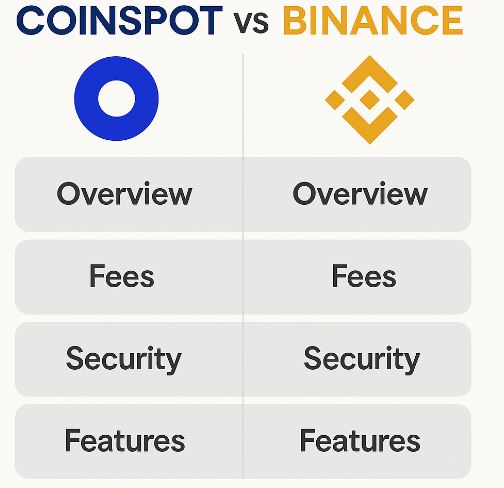
CoinSpot vs Binance Australia: Which is Better for Buying Crypto?
CoinSpot vs Binance Australia: Which is Better for Buying Crypto? πŸ” Key Comparisons: FeatureCoinSpotBinance AURegulationAUSTRAC, ISO 27001AUSTRACCoins460+350+Fees1% Instant Buy0.1% SpotEase
If you’ve been wondering how to buy Bitcoin in Australia, or which is the most secure and user-friendly crypto platform,
What is Adrian Portelli's net worth?
Adrian Portelli's net worth has experienced significant growth in recent years, primarily due to his entrepreneurial ventures and strategic investments.
How I Earn Crypto For Free
A lot of people think you needa invest a lot to make money in crypto but it's insane how much
Which Bank Is Best For Crypto in Australia (April 2024)
We just spoke with Australian banks and did our transfer tests to check which banks are crypto-friendly. Here is the
Free Australian Retirement Calculator
Free Australian Retirement Calculator Australian Retirement Calculator Australian Retirement Calculator Current Savings ($) Annual Contribution ($) Annual Return (%) Years
Free Australian Savings Calculator
Free Australian Savings Calculator Australian Savings Calculator Australian Savings Calculator Initial Amount ($) Monthly Savings ($) Interest Rate (%) Savings
Free Australian Mortgage Calculator
Free Australian Mortgage Calculator Australian Mortgage Calculator Australian Mortgage Calculator Loan Amount ($) Interest Rate (%) Loan Term (Years) Calculate

Hey there, fellow traders and investors! If you're like me, in your early twenties and eager to dive into the
FP Markets Review: The Best Broker for Australians
Hey there, fellow daytraders! If you're on the hunt for the perfect broker to fuel your trading adventures, look no
Investing in growth stocks can be an excellent way to build wealth over time. These types of stocks are typically
Day trading can be a highly rewarding way to make money, but it can also be risky and challenging. Beginners
As a trading professional, you must have heard the term seasonality analysis before. It refers to the study of how
Volatility indicators are an essential tool for traders and investors who want to gauge the overall mood of the market.
Market breadth indicators are essential tools for investors and traders looking to analyze the overall health of the market. These
As a trader, it's essential to understand divergence analysis as it can help you make informed decisions and maximize your
Welcome to our comprehensive guide on Rectangle Patterns in Trading! In today's fast-paced world, trading has become a popular way
If you are a trader, you have probably heard of the flags and pennants pattern. It is a popular technical
Triangular patterns are one of the most effective chart patterns used in trading. They are characterized by a series of
Double top/bottom pattern is a popular chart pattern used in technical analysis to identify a trend reversal in the market.
At some point in time, every trader encounters the cup and handle pattern. It is one of the most popular
we're here to provide you with a comprehensive guide on the Head and Shoulders pattern – a popular technical analysis
Trading channels in trading are crucial to achieving success in the financial markets. A trading channel is a technical analysis
As trading becomes more popular, it's important to understand the tools and techniques that can help you make successful trades.
As a trader or investor, you are constantly looking for ways to analyze the market trends and make informed decisions.
Renko charts have become increasingly popular among traders and investors due to their simplicity and effectiveness in identifying trends in
Point and figure charts have been around for over a century and are a valuable tool for traders and investors
At our company, we are committed to providing the best possible resources and information to our clients. That's why we're
At its core, Elliott Wave Theory is a technical analysis approach used to analyze financial market trends and forecast potential
Pivot points are an essential tool in trading. These points help traders to identify potential price movements in the market
As traders, we are always looking for ways to better analyze the markets and make informed trading decisions. One tool
MACD (Moving Average Convergence Divergence) is a popular technical analysis indicator used to identify trends and potential buy and sell
Chart patterns are an essential aspect of technical analysis and are used to identify potential trading opportunities in the market.
As experienced traders know, one of the keys to success in the markets is understanding volume analysis. Volume analysis refers
As a trader or investor, one of the most important concepts to understand is support and resistance levels. These levels
In the world of trading, momentum indicators are an essential tool for predicting the future price movements of securities. These
Are you tired of using the same old technical indicators that everyone else is using? Do you want to stand

What You Need to Know Before Buying Bitcoin in Australia

What You Need to Know Before Buying Bitcoin in Australia

If you’re thinking about buying Bitcoin in 2025, you’re not alone. But before jumping in, there are a few important things Australian investors should understand.


🏦 1. It’s Legal β€” But Regulated

Bitcoin is legal in Australia, but all crypto platforms must comply with AUSTRAC and AML laws. Always choose a regulated exchange like CoinSpot or Swyftx.


πŸ“œ 2. You’ll Need to Verify Your Identity

All exchanges require ID verification. This usually includes a driver’s license, selfie, and proof of address.


🧾 3. Crypto Is Taxed by the ATO

Crypto profits are subject to capital gains tax in Australia. Keep good records of your trades, even if you’re just buying and holding.


πŸ” 4. Security Is Critical

Use 2FA, strong passwords, and consider moving assets off the exchange to a cold wallet.


πŸ’° 5. Start Small and Learn

Don’t go β€œall in” immediately. Start with a small amount and grow your knowledge before scaling your investment.


Final Thoughts:
Understanding the legal, tax, and safety landscape before buying Bitcoin in Australia helps you avoid costly mistakes. Use trusted, local exchanges and invest wisely.

Buying Crypto in Australia: Common Mistakes to Avoid

Buying Crypto in Australia: Common Mistakes to Avoid

Crypto investing in Australia is booming β€” but it’s also easy to make avoidable mistakes. Here are the most common pitfalls beginners face and how to avoid them:


❌ 1. Using Unregulated Exchanges

Always choose an AUSTRAC-registered platform like CoinSpot or Swyftx. Avoid foreign, unlicensed websites.

❌ 2. Ignoring Security Best Practices

Use 2FA, strong passwords, and don’t leave large balances on exchanges.

❌ 3. Failing to Understand Tax Obligations

The ATO treats crypto as a CGT asset. Know when to report gains and losses.

❌ 4. Buying the Hype

Avoid FOMO. Do research before buying any trending coin.

❌ 5. Going All In

Invest gradually and diversify. Start with small amounts.

Top Australian Banks That Support or Block Crypto Transactions

Top Australian Banks That Support or Block Crypto Transactions

Your bank can affect your crypto journey. Here’s what to know:


βœ… Banks That Support Crypto:

  • Commonwealth Bank (limited)
  • Westpac
  • ING
  • Macquarie

❌ Banks With Restrictions:

  • ANZ (known for blocks)
  • NAB (case-by-case)
  • BOQ

Tip: Use PayID to avoid card-based restrictions.

CoinSpot vs Binance Australia: Which is Better for Buying Crypto?

CoinSpot vs Binance Australia: Which is Better for Buying Crypto?


πŸ” Key Comparisons:

FeatureCoinSpotBinance AU
RegulationAUSTRAC, ISO 27001AUSTRAC
Coins460+350+
Fees1% Instant Buy0.1% Spot
Ease of UseBeginner-FriendlyMore Advanced

βœ… Verdict:

CoinSpot is best for beginners. Binance is suited to traders who want advanced tools and lower market fees.

How to Buy Bitcoin in Australia: Why CoinSpot is the Best Crypto Exchange in 2026

If you’ve been wondering how to buy Bitcoin in Australia, or which is the most secure and user-friendly crypto platform, the answer is clear: CoinSpot. As Australia’s leading cryptocurrency exchange, CoinSpot offers a seamless and trusted experience for both beginners and advanced traders alike. Founded in 2013, this Melbourne-based platform has grown to become the go-to destination for buying, selling, and managing digital assets in Australia.

Below, we explore why CoinSpot continues to dominate the Australian market in 2026 and why it’s the best platform to buy Bitcoin and other cryptocurrencies in Australia.


βœ… CoinSpot at a Glance

  • Over 460+ cryptocurrencies supported
  • AUSTRAC-registered and ISO 27001 certified for world-class security
  • Instant Buy, Sell & Swap functionality
  • Mobile app available for iOS and Android
  • Multiple payment methods including PayID, POLi, BPAY, Direct Deposit
  • Staking rewards on multiple coins
  • NFT marketplace integration
  • 24/7 live chat customer support

Why CoinSpot is the Best Way to Buy Bitcoin in Australia

1. Simple, User-Friendly Interface

For first-time investors asking β€œhow do I buy Bitcoin in Australia?”, CoinSpot’s clean, easy-to-navigate platform is the perfect place to start. You can register, verify your ID, and make your first purchase in minutes. The Instant Buy feature allows you to purchase Bitcoin, Ethereum, or any of the 460+ supported coins with just a few clicks.

Whether you’re accessing the site via desktop or using the CoinSpot mobile app, the layout is intuitive and designed with beginners in mind.


2. Trusted and Regulated Australian Platform

CoinSpot is AUSTRAC-registered and meets all local compliance standards. It’s also the first Australian exchange to receive ISO 27001 certification for information security β€” a huge trust signal for investors. Your data and funds are protected by stringent security protocols, making CoinSpot the safest choice for Australians wanting to invest in crypto.


3. Wide Range of Cryptocurrencies

CoinSpot isn’t just about Bitcoin. With over 460+ coins, including Ethereum, Solana, Cardano, Ripple, and more, it offers the most diverse crypto offering in Australia. You can buy, sell, and swap instantly between any supported assets.

Whether you’re a long-term HODLer or a trader chasing altcoin opportunities, CoinSpot gives you access to the full spectrum of the crypto market.

How to Buy Bitcoin in Australia: Why CoinSpot is the Best Crypto Exchange

4. Multiple Payment Methods

CoinSpot supports a wide variety of deposit methods including:

  • PayID (instant, free)
  • POLi
  • BPAY
  • Direct Bank Deposit
  • Cash Deposits (via Blueshyft)

These flexible funding options make it extremely easy to get started, even if you’re new to crypto.


5. Low Fees and Transparent Pricing

CoinSpot offers competitive fees, with Instant Buy/Sell transactions charged at 1%, and Market Orders as low as 0.1% for more experienced traders. All fees are clearly displayed before you confirm a transaction, ensuring 100% transparency β€” no hidden surprises.


6. Crypto Staking Rewards

Want to earn passive income on your holdings? CoinSpot supports staking for over 20 popular coins, allowing users to earn rewards by holding crypto in their wallets. It’s an easy way to boost your returns without trading.


7. Australian Customer Support

Unlike many overseas exchanges, CoinSpot offers real-time customer service with 24/7 live chat and a comprehensive help desk. Their Melbourne-based team is known for its fast, helpful support β€” a major plus for new users navigating their first crypto purchase.


8. Built-in NFT Marketplace

CoinSpot also allows users to buy, sell, and hold NFTs directly from their platform using Ethereum. No need to connect to OpenSea or worry about external wallets β€” everything is handled securely inside your account.

How to Buy Bitcoin in Australia: Why CoinSpot is the Best Crypto Exchange

How to Get Started on CoinSpot

Buying Bitcoin in Australia has never been easier. Just follow these simple steps:

  1. Create a free account at www.coinspot.com.au
  2. Verify your ID (usually takes minutes)
  3. Deposit AUD via PayID, BPAY, or other methods
  4. Buy Bitcoin instantly or trade on the open market
  5. Secure your crypto in your CoinSpot wallet or send to external storage

Final Verdict: Is CoinSpot Worth It?

Absolutely. Whether you’re searching how to buy Bitcoin in Australia, or you’re a seasoned investor looking for a secure, full-featured exchange, CoinSpot ticks all the boxes. With world-class security, a massive range of cryptocurrencies, low fees, and top-tier customer service, it’s hands-down the best crypto exchange in Australia in 2026.

Start your crypto journey with confidence. Buy Bitcoin and other cryptocurrencies the easy, secure way β€” with CoinSpot.


What is Adrian Portelli’s net worth?

Adrian Portelli’s net worth has experienced significant growth in recent years, primarily due to his entrepreneurial ventures and strategic investments. Here’s a breakdown of his estimated net worth over time:

  • 2023: Portelli’s net worth was estimated at $87 million from his extensive collections of sports cars and properties, without applying a valuation of LMCT+ to it. The issue being LMCT+ could be worth $0 tomorrow due to the style of industry.
  • 2024: His net worth increased to approximately $137 million.
  • 2025: Recent reports indicate his net worth has reached $174 million as profit from LMCT+ is slowing but other investments are beginning to derive a return on investment.

This progression reflects a consistent upward trajectory in Portelli’s wealth, driven by the success of LMCT+ predominantly and also to a far lesser extent his property acquisitions, and other business ventures.

Prior to 2021 his net worth was only a measly $1-$2m.

How I Earn Crypto For Free

A lot of people think you needa invest a lot to make money in crypto but it’s insane how much free crypto you can earn each month. I get a few hundred a month in free rewards now.

Coinbase – You can do their “learn and earn quizzes” only takes 5mins and rewards $3 to $9 each. I’ve made $90 now in total.

Coinbase Defi Wallet – After you install the wallet and deposit about $30 Eth. There is $220 of quests you can do. Each one you buy coin, mint something, interact with dapp then rewarded triple what you paid for it. Then I convert it back to Eth.

Crypto Eftpos Card – All my groceries, fuel etc are paid with this and give me 2% crypto back on every purchase. So $100 of groceries is instantly $1.50 free into CRO in app. Then you can stake it for 6.59% interest per year. Made over $1100 from this now. Also has a free daily gem claim. Each month get $2 of free CRO.

Swyftx Learn and Earn – Also has quizzes for free crypto and also a affiliate referal program, 30% commission for life. Referred 28 people and I’ve gotten about $400

Coinspot – Use someones referral link, deposit $1. get free $10 bitcoin then withdraw if you want.

Staked wallets – All my crypto is staked in different wallets. For example $2000 of DOT I have staked earns me $7 a week for free. In total staking earns me around $120+ a month free. DOT has an interest rate of 18%!

Brave Browser – Use the browser with ads on and you get $2 of free BAT a month. Send it out the uphold wallet.

Youhodler – A bit trickier but they have a free bitcoin miner if you make at least 1k of trades a month. You can do safe slow trades and get access to $30 free bitcoin a month

Its a lot of work to setup with 30mins a day at first, then only 15mins a week to make a few hundred a month free. Of my 13k in crypto. I earned about 30% of it for free.

Heres an example of my cashback crypto after paying for groceries at aldi

Heres an example of my cashback crypto after paying for groceries at aldi

I am using the card from crypto.com.

I usually payID money from my bank. $200 sent in is $200 on the card. So I get 0 fees, and get the rewards, how cools that?!

But when I’m in my pinch I will convert some of my crypto to fiat if I need to buy something which has a small transaction fee.

They have different tiers of cards available. I have the ruby red card. You just need to stake $500 of CRO for 6 months to get it. Comes in the mail, it’s a nice metal visa card, you can use it anywhere any debit card is accepted. I use it for everything now. The only thing it doesn’t give you rewards on is bills and fines. But for everything else its awesome.

Which Bank Is Best For Crypto in Australia (April 2024)

We just spoke with Australian banks and did our transfer tests to check which banks are crypto-friendly. Here is the summary:

ANZ Bank

ANZ has no hard limits on how much you can transfer to exchanges, but they’re a bit cautious with new customers. Heads up, though: they’re not fans of Binance or SafeHaven.io.

ING

ING stands out for not dictating what customers can do with their money, including allowing transfers to crypto exchanges, no matter the amount. Just a heads up: if you’re moving more than $1000, you’re gonna have to wait an extra day. And oh, they’re not into business accounts for crypto trading.

NAB

NAB is on board with the crypto, too. They’re selective about which exchanges they play nice with but have a daily cap of $40k for approved ones. First-time transactions might get a double-take, but it’s smooth sailing after.

On the flip side, not all banks are riding the crypto wave:

Westpac and Commonwealth Bank are throwing some shade on crypto transactions. Westpac’s stance is a bit murky; they say no, but our test transactions go through. Commonwealth Bank, however, has put a tight leash on transfers to crypto exchanges, capping at $10k a month. CBA will also hold your transfer for 24hr regardless of how big or small it is.

Macquarie Bank is pretty much the party pooper, officially saying a big no to any crypto exchange transfers. Yet, we also had no issues with test transactions.

So, what’s the takeaway? The Aussie banking landscape for crypto is a mixed bag. Some are embracing the future, while others are playing it safe. Choose wisely based on your crypto needs.

Free Australian Retirement Calculator

Free Australian Retirement Calculator

Australian Retirement Calculator

Australian Retirement Calculator

Free Australian Savings Calculator

Free Australian Savings Calculator

Australian Savings Calculator

Australian Savings Calculator

Free Australian Mortgage Calculator

Free Australian Mortgage Calculator

Australian Mortgage Calculator

Australian Mortgage Calculator

My Journey Through 5 Game-Changing Trading and Investing Books

Hey there, fellow traders and investors! If you’re like me, in your early twenties and eager to dive into the exciting world of trading and investing, you’ve come to the right place. In this article, I’m thrilled to share my personal journey and reviews of five incredible books that have been my guiding lights in the complex realm of finance.

1. “Unholy Grails” by Nick Radge

I can’t stress enough how much “Unholy Grails” by Nick Radge has impacted my trading approach. Radge’s book is like a treasure chest of trading wisdom. It’s not just about strategies; it’s about finding your unique trading style and understanding the importance of discipline and risk management. Trust me; this book is a game-changer for young traders like us.

2. “The Way of the Turtle” by Curtis Faith

Reading “The Way of the Turtle” by Curtis Faith was like getting a backstage pass to the world of successful trading. It recounts the incredible story of the Turtle Traders, and Curtis Faith, one of them, spills the beans on their secret sauce. If you want to master trend-following strategies and learn about the psychology behind trading, this book is a must-read.

3. “Trend Following” by Michael Covel

For a young trader like me, “Trend Following” by Michael Covel is a goldmine of knowledge. Covel’s book dives deep into the philosophy of trend following and introduces you to legendary trend followers. It emphasizes the importance of discipline and sticking to a proven strategy, which is crucial for our generation entering the trading arena.

4. “How I Made 2 Million Dollars in the Stock Market” by Nicolas Darvas

Nicolas Darvas’s book, “How I Made 2 Million Dollars in the Stock Market,” is nothing short of inspiring. Darvas shares his incredible journey from a dancer to a millionaire stock trader. His trading system, the Darvas Box, is a fascinating approach that focuses on technical analysis and price patterns. It’s a must-read for young traders looking for unconventional strategies.

5. “Reminiscences of a Stock Operator” by Edwin LefΓ¨vre

Reminiscences of a Stock Operator” by Edwin LefΓ¨vre takes us back in time to the thrilling world of Jesse Livermore, a legendary trader. This book provides invaluable insights into the psychology of trading and the emotional rollercoaster that traders often go through. LefΓ¨vre’s storytelling makes this book a captivating read, and the lessons are timeless.

Conclusion

As a young trader, my journey through these five trading and investing books has been nothing short of transformative. These books have given me a solid foundation in trading principles and strategies. Whether you’re just starting or have a bit of experience under your belt, incorporating the wisdom from these books into your trading journey is a surefire way to fast-track your success.

Knowledge is the key in the trading world, and these books are your ticket to gaining that knowledge. So, fellow young traders and investors, don’t miss out on these gems. Add them to your reading list, absorb the wisdom within, and watch your trading journey soar to new heights.

FP Markets Review: The Best Broker for Australians

Hey there, fellow daytraders! If you’re on the hunt for the perfect broker to fuel your trading adventures, look no further than FP Markets. This broker isn’t just good; it’s like the secret weapon in the arsenal of us daytraders. Let’s dive into the deets and see why FP Markets is the go-to choice for us Aussies looking to conquer the markets.

Unpacking the FP Markets Magic

1. Crushin’ it with Experience

FP Markets has been in the trading game for over 15 years. Yep, that’s more than half our lifetime! This ain’t just another broker; these guys have seen it all. They know the ups, the downs, and the sideways moves of the market. That experience? It’s like having a mentor who’s been through every market twist and turn, helping us make savvy moves.

2. Trading Playground, Unlimited Fun

Guess what? FP Markets has this insane collection of tradable stuff. We’re talkin’ Forex, commodities, indices, and even cryptocurrencies. It’s like having access to the ultimate trading playground. With such variety, we can switch between instruments, follow trends, and always find something that fits our vibe.

3. Tech Savvy Vibes

As tech-savvy daytraders, we need platforms that get us, right? FP Markets gets it too. They offer platforms like MetaTrader 4 and MetaTrader 5, plus IRESS. These platforms aren’t just tools; they’re like our trading sidekicks. They give us real-time info, cool analysis tools, and a setup we can personalize. It’s tech that speaks our language.

4. No More Hidden Games

FP Markets doesn’t play games with our money. They’re all about transparent pricing. No hidden fees or sketchy surprises. And those tight spreads? They’re like a high-five for our wallets. We can execute trades without stressing about costs eating into our gains. It’s a win-win.

5. Learning’s the Name of the Game

We’re not just here to trade; we’re here to level up our trading skills. FP Markets knows this. They hook us up with webinars, video tutorials, and market analysis. It’s like having a trading mentor who’s just a click away. Learning while trading? That’s how we roll.

6. You’re the Star, Always

Ever had a broker treat you like a VIP? That’s FP Markets for ya. They’re all about making us feel like the stars we are. With 24/5 customer support, they’ve got our back whenever we need ’em. It’s like having a support squad cheering us on, ensuring we’re always on top of our game.

FP Markets: Our Perspective

So why is FP Markets our jam? First off, they’ve got the experience to back up their game. You know they’ve seen it all and are ready to guide us through market chaos. Plus, the whole transparency thing? It’s like they’re speaking our language. No hidden stuff, just straightforward trading.

Their tech? It’s the kind that suits us. We’re millennials, after all. We need platforms that match our fast-paced lifestyle and need for info. FP Markets delivers that in spades.

And let’s not forget the education angle. We’re always hungry for knowledge, and FP Markets feeds that hunger. With their educational resources, we’re not just trading blindly; we’re making calculated moves.

Wrapping It Up

So, there you have it, fellow young traders. FP Markets is the real deal. From their experience to their tech-savvy approach, they’re the broker we’ve been looking for. Whether you’re just starting out or have a few years of trading under your belt, FP Markets has your back.

How to Identify and Invest in Growth Stocks

Investing in growth stocks can be an excellent way to build wealth over time. These types of stocks are typically associated with companies that are expected to grow at a faster pace than the overall market. Identifying and investing in growth stocks can be a challenging task, but with the right information and tools, it can be done successfully. In this article, we will discuss how to identify and invest in growth stocks that have the potential to deliver strong returns over the long term.

  1. Start with the Basics

Before investing in any stock, it is essential to understand the fundamentals of the company, such as its business model, industry trends, financials, and management team. You should research the company’s products or services, market position, competitors, and growth prospects. These factors will give you a solid understanding of the company’s potential for growth.

  1. Look for Companies with Strong Earnings Growth

One of the most important indicators of a growth stock is its earnings growth rate. Companies with high earnings growth rates are more likely to deliver strong returns over the long term. Look for companies with a track record of consistent earnings growth and a positive outlook for the future. Earnings growth can be measured in various ways, such as year-over-year growth or compound annual growth rate (CAGR).

  1. Check the Valuation

It’s essential to pay attention to the stock’s valuation when investing in growth stocks. A stock’s valuation is the price investors are willing to pay for a share of the company’s earnings. When a stock is overvalued, it may be due for a correction, which can lead to significant losses. On the other hand, undervalued stocks may present a buying opportunity. One common valuation metric to consider is the price-to-earnings (P/E) ratio. A company with a high P/E ratio may be overvalued, while a low P/E ratio may indicate an undervalued stock.

  1. Look for Companies with Strong Competitive Advantages

Companies with strong competitive advantages are more likely to succeed in the long term. A competitive advantage is a unique feature or characteristic that sets a company apart from its competitors. Some examples of competitive advantages include brand recognition, patents, economies of scale, and network effects. Look for companies with sustainable competitive advantages that will enable them to maintain their market position and continue to grow over time.

  1. Diversify Your Portfolio

Diversification is essential when investing in growth stocks. It’s crucial to spread your investments across different industries, sectors, and market capitalizations. This will help reduce the overall risk of your portfolio and provide exposure to different growth opportunities.

  1. Stay Informed

Staying informed is crucial when investing in growth stocks. Follow the latest news and trends in the industry and keep an eye on the company’s financials and management team. This will help you make informed decisions and stay ahead of the curve.

Conclusion

In conclusion, investing in growth stocks can be a great way to build wealth over time, but it requires careful research and analysis. By starting with the basics, looking for companies with strong earnings growth, checking the valuation, finding companies with strong competitive advantages, diversifying your portfolio, and staying informed, you can identify and invest in growth stocks that have the potential to deliver strong returns over the long term.

Top 10 Day Trading Strategies for Beginners

Day trading can be a highly rewarding way to make money, but it can also be risky and challenging. Beginners who are just starting out with day trading may find it overwhelming and difficult to navigate. However, with the right strategies, beginners can increase their chances of success in day trading. In this article, we will discuss the top 10 day trading strategies for beginners that can help them become successful day traders.

  1. Plan Your Trades and Stick to Your Plan

One of the most important aspects of day trading is to have a plan for every trade you make. This includes setting a target price for buying and selling a stock, as well as determining your stop-loss level. It is essential to stick to your plan, as emotions can often lead to making irrational decisions that can result in significant losses.

  1. Focus on Liquid Stocks

As a beginner day trader, it is essential to focus on trading liquid stocks. Liquid stocks are those that have a high trading volume, which makes it easier to buy and sell them quickly. This can help you avoid getting stuck in a trade that you cannot get out of.

  1. Use Technical Analysis

Technical analysis involves analyzing charts and market data to identify trends and patterns in the market. This can help you make more informed decisions when it comes to buying and selling stocks. There are various technical indicators that can be used for this purpose, such as moving averages, RSI, and MACD.

  1. Keep an Eye on the News

It is crucial to keep an eye on the news, as it can have a significant impact on the stock market. News events such as earnings reports, economic data releases, and geopolitical events can all affect the prices of stocks. By staying up-to-date with the news, you can make better-informed trading decisions.

  1. Use Stop-Loss Orders

Stop-loss orders are an essential tool for managing risk in day trading. A stop-loss order is an order that automatically sells a stock if it falls below a certain price. This can help you limit your losses in case a trade goes against you.

  1. Have Realistic Expectations

Day trading is not a get-rich-quick scheme, and it requires hard work and dedication to become successful. As a beginner, it is essential to have realistic expectations and not to expect to make a fortune overnight. It is also important to have patience and to learn from your mistakes.

  1. Practice Risk Management

Risk management is crucial in day trading, and it involves managing your trades in a way that minimizes your risk. This can include setting stop-loss orders, diversifying your portfolio, and not risking too much money on any single trade.

  1. Keep a Trading Journal

Keeping a trading journal is an excellent way to track your progress and identify areas where you can improve. In your trading journal, you should record all your trades, including the entry and exit prices, the size of the trade, and the reason for entering the trade. This can help you identify patterns in your trading and make better-informed decisions in the future.

  1. Avoid Overtrading

Overtrading is a common mistake that many beginner day traders make. Overtrading involves making too many trades, which can lead to significant losses. It is essential to have a trading plan and to stick to it, rather than making trades impulsively.

  1. Learn from Successful Traders

One of the best ways to learn about day trading is to learn from successful traders. There are many books, blogs, and online courses available that can teach you the strategies and techniques used by successful day traders. By learning from the best, you can increase your chances of success in day trading.

In conclusion, day trading can be a challenging but rewarding way to make money.

Seasonality Analysis in Trading

As a trading professional, you must have heard the term seasonality analysis before. It refers to the study of how a particular financial instrument or asset performs during different times of the year. This analysis is important because it can provide valuable insights into the behavior of a market, allowing traders to make more informed decisions. In this article, we will explore the concept of seasonality analysis in trading and how it can be used to enhance your trading strategy.

What is Seasonality Analysis in Trading?

Seasonality analysis is the process of studying historical price patterns and trends in financial markets to identify seasonal patterns that may repeat themselves in the future. It is based on the idea that the market tends to behave in certain ways during specific times of the year due to various economic and social factors.

Seasonality analysis can be performed on different timeframes, from intraday to long-term charts. For instance, intraday traders may look for seasonal patterns that repeat themselves throughout the trading day, while longer-term traders may study monthly or yearly price patterns.

Why is Seasonality Analysis Important for Traders?

Seasonality analysis can provide traders with valuable insights into the behavior of a market. By studying historical price patterns, traders can identify seasonal trends that may repeat themselves in the future. This can help traders to make more informed decisions about when to enter or exit a trade.

For example, let’s say you are a commodities trader and you notice that gold tends to perform well during the month of December. By analyzing historical data, you may discover that this is due to increased demand for gold during the holiday season, as people buy gold jewelry and gifts. Armed with this knowledge, you may decide to buy gold in November and hold it until the end of December, taking advantage of the seasonal trend.

How to Perform Seasonality Analysis?

To perform seasonality analysis, traders need access to historical price data. This data can be obtained from various sources, such as trading platforms, financial websites, and data providers.

Once you have obtained the historical price data, the next step is to analyze it to identify seasonal patterns. This can be done using various technical analysis tools, such as moving averages, trend lines, and chart patterns.

It is important to note that seasonality analysis should not be the only factor used to make trading decisions. Other factors, such as fundamental analysis, market sentiment, and risk management, should also be taken into consideration.

Conclusion

Seasonality analysis is a powerful tool that traders can use to gain insights into the behavior of a market. By studying historical price patterns, traders can identify seasonal trends that may repeat themselves in the future. However, it is important to remember that seasonality analysis should not be the only factor used to make trading decisions. Traders should also consider other factors, such as fundamental analysis, market sentiment, and risk management.

If you want to learn more about seasonality analysis and other trading strategies, be sure to check out our website for more informative articles.

Volatility Indicators

Volatility indicators are an essential tool for traders and investors who want to gauge the overall mood of the market. In simple terms, volatility measures the extent of price swings in a particular market, security or instrument. A high degree of volatility indicates that the market is unpredictable, while low volatility suggests that the market is stable and less risky.

For traders and investors, understanding volatility is crucial because it helps them make informed decisions about when to enter or exit a trade. There are several different types of volatility indicators that traders can use, each with its unique approach and formula. In this article, we will discuss some of the most popular volatility indicators and how they can be used in trading.

  1. Bollinger Bands Bollinger Bands are a popular volatility indicator that was developed by John Bollinger in the 1980s. This indicator consists of three lines that are plotted on a price chart. The middle line represents a simple moving average, while the upper and lower lines represent two standard deviations away from the moving average. When the market is experiencing high volatility, the distance between the upper and lower bands widens, indicating that the market is unpredictable. Conversely, when the market is experiencing low volatility, the distance between the bands narrows, indicating that the market is stable.
  2. Average True Range (ATR) The Average True Range (ATR) is another popular volatility indicator that was developed by J. Welles Wilder Jr. This indicator measures the average range of price movements in a particular security or instrument over a specific period. A higher ATR value indicates that the market is experiencing high volatility, while a lower ATR value suggests that the market is stable. Traders can use the ATR to set stop-loss levels and take-profit levels based on the expected price movement.
  3. Relative Strength Index (RSI) The Relative Strength Index (RSI) is a popular momentum indicator that can also be used to gauge volatility. This indicator measures the strength of a security’s price action relative to its own past performance. A higher RSI value indicates that the market is experiencing high volatility, while a lower RSI value suggests that the market is stable. Traders can use the RSI to identify overbought and oversold conditions and take appropriate trading decisions.
  4. Moving Average Convergence Divergence (MACD) The Moving Average Convergence Divergence (MACD) is a popular trend-following momentum indicator that can also be used to measure volatility. This indicator consists of two lines that are plotted on a price chart. The MACD line represents the difference between two moving averages, while the signal line represents a moving average of the MACD line. When the MACD line crosses above the signal line, it generates a buy signal, indicating that the market is experiencing high volatility. Conversely, when the MACD line crosses below the signal line, it generates a sell signal, indicating that the market is experiencing low volatility.

In conclusion, volatility indicators are an essential tool for traders and investors who want to make informed decisions about their trades. By understanding the level of volatility in the market, traders can set appropriate stop-loss levels, take-profit levels, and identify overbought and oversold conditions. The Bollinger Bands, Average True Range (ATR), Relative Strength Index (RSI), and Moving Average Convergence Divergence (MACD) are some of the most popular volatility indicators that traders can use in their trading strategies.

Market Breadth Indicators

Market breadth indicators are essential tools for investors and traders looking to analyze the overall health of the market. These indicators help to gauge the strength of the market by measuring the number of stocks that are advancing versus the number of stocks that are declining. In this article, we will discuss the different market breadth indicators and how they can be used to make informed investment decisions.

  1. Advance-Decline Line (AD Line) The Advance-Decline Line is one of the oldest and most widely used market breadth indicators. It measures the difference between the number of advancing stocks and the number of declining stocks on a particular exchange. The AD Line can help investors to identify trends and potential market turning points.
  2. Arms Index (TRIN) The Arms Index, also known as the TRading INdex (TRIN), is a market breadth indicator that measures the ratio of advancing to declining stocks and the ratio of advancing to declining volume. The Arms Index is used to identify overbought and oversold conditions in the market.
  3. McClellan Oscillator The McClellan Oscillator is a market breadth indicator that uses the difference between the number of advancing and declining stocks on a particular exchange to calculate an oscillator. The McClellan Oscillator is used to identify short-term trends in the market and potential turning points.
  4. High-Low Index The High-Low Index is a market breadth indicator that measures the number of new highs versus new lows on a particular exchange. The High-Low Index can help investors to identify potential market turning points.
  5. Tick Index The Tick Index is a market breadth indicator that measures the number of stocks that are ticking up versus the number of stocks that are ticking down on a particular exchange. The Tick Index can help investors to identify potential market turning points and trends.

In conclusion, market breadth indicators are essential tools for investors and traders looking to analyze the overall health of the market. These indicators can help to gauge the strength of the market by measuring the number of stocks that are advancing versus the number of stocks that are declining. By understanding the different market breadth indicators and how they can be used, investors and traders can make informed investment decisions and potentially improve their returns.

Divergence Analysis in Trading: A Comprehensive Guide

As a trader, it’s essential to understand divergence analysis as it can help you make informed decisions and maximize your profits. Divergence analysis is the comparison of price action and an oscillator indicator to identify potential price reversals. In this article, we’ll delve into the concept of divergence analysis and how it can be used in trading.

Understanding Divergence Analysis

Divergence analysis is the process of comparing the price action on a chart with an oscillator indicator. An oscillator indicator is a technical indicator that oscillates above and below a centerline or between fixed levels. Some of the commonly used oscillator indicators include the relative strength index (RSI), the moving average convergence divergence (MACD), and the stochastic oscillator.

Divergence occurs when the price action on a chart and the oscillator indicator move in opposite directions. There are two types of divergence: bullish and bearish. Bullish divergence occurs when the price action on a chart is making lower lows, but the oscillator indicator is making higher lows. Conversely, bearish divergence occurs when the price action on a chart is making higher highs, but the oscillator indicator is making lower highs.

Using Divergence Analysis in Trading

Divergence analysis can be used to identify potential price reversals and to confirm trend strength. Traders use divergence analysis in conjunction with other technical analysis tools to make informed trading decisions. Divergence analysis is particularly useful when trading momentum-based strategies.

When using divergence analysis, traders should look for confirmation from other technical analysis tools such as trend lines, support, and resistance levels, and candlestick patterns. Traders should also be aware of false divergences, which occur when the price action on a chart and the oscillator indicator move in the same direction, but at different rates.

Incorporating Divergence Analysis into Your Trading Strategy

To incorporate divergence analysis into your trading strategy, you should first choose an oscillator indicator that best suits your trading style. The RSI is a popular choice among traders as it is a versatile oscillator indicator that can be used in a variety of trading strategies. The MACD is also commonly used as it provides a visual representation of the convergence and divergence of two moving averages.

Once you’ve chosen an oscillator indicator, you should practice identifying divergences on a chart. Look for instances where the price action on a chart and the oscillator indicator are moving in opposite directions. When you identify a divergence, confirm it with other technical analysis tools and use it to inform your trading decisions.

Conclusion

Divergence analysis is an essential tool for traders as it can help identify potential price reversals and confirm trend strength. By comparing the price action on a chart with an oscillator indicator, traders can make informed trading decisions and maximize their profits. Incorporating divergence analysis into your trading strategy can help you become a more successful trader.

Rectangle Patterns In Trading

Welcome to our comprehensive guide on Rectangle Patterns in Trading! In today’s fast-paced world, trading has become a popular way to invest money and gain profits. The key to success in trading lies in identifying the right patterns and making informed decisions. Rectangle patterns are one such tool that traders use to identify potential breakouts and trend reversals. In this article, we will provide you with a detailed understanding of rectangle patterns and how they can be used in trading.

What are Rectangle Patterns in Trading?

Rectangle patterns are a type of technical analysis pattern that traders use to identify potential breakouts or trend reversals. As the name suggests, these patterns are formed when the price of a security trades within a specific range, forming a rectangle shape on a chart. The pattern is formed by connecting the highs and lows of the price action with horizontal trend lines.

Types of Rectangle Patterns

There are two types of rectangle patterns: bullish and bearish. A bullish rectangle pattern is formed when the price is in an uptrend and consolidates within a rectangle. Conversely, a bearish rectangle pattern is formed when the price is in a downtrend and consolidates within a rectangle.

How to Identify Rectangle Patterns?

To identify a rectangle pattern, traders need to look for a price range that has clear highs and lows. The trend lines should be horizontal and parallel to each other, and the price should be consolidating within this range for a prolonged period. Traders can also look for a decrease in trading volume during the consolidation period, indicating a lack of interest in the security at that price level.

Trading Strategies using Rectangle Patterns

Once a rectangle pattern has been identified, traders can use it to make informed trading decisions. If the price breaks out of the rectangle pattern on high trading volume, it is an indication of a potential trend reversal or breakout. Traders can use this information to take a long or short position in the security, depending on whether the pattern is bullish or bearish.

However, traders should also be aware that rectangle patterns are not foolproof and can result in false breakouts. It is always advisable to use stop-loss orders to manage risk and protect profits.

Conclusion

In conclusion, rectangle patterns are an important tool for traders to identify potential breakouts and trend reversals. By understanding how to identify these patterns and using them in trading strategies, traders can make informed decisions and maximize profits. However, as with any trading strategy, it is important to manage risk and protect profits. We hope this guide has provided you with a comprehensive understanding of rectangle patterns in trading.

Flags and Pennants Pattern: How to Identify and Trade it Effectively

If you are a trader, you have probably heard of the flags and pennants pattern. It is a popular technical analysis tool that is used to identify and trade trends in the financial markets. This pattern is especially useful in the stock market, where trends can be volatile and difficult to predict.

In this article, we will provide you with a comprehensive guide on how to identify and trade the flags and pennants pattern effectively. We will cover the basics of the pattern, its characteristics, and the trading strategies that you can use to take advantage of it.

Understanding the Flags and Pennants Pattern

The flags and pennants pattern is a continuation pattern that occurs during an uptrend or downtrend in the financial markets. It is formed when the price consolidates after a strong move in one direction. The pattern is characterized by two parallel trendlines that converge, forming a triangle shape.

The flag pattern is characterized by a small rectangle that is formed between the two trendlines. The rectangle is usually formed when the price retraces slightly after the initial move. The pennant pattern, on the other hand, is characterized by a small triangle that is formed between the two trendlines. The triangle is usually formed when the price consolidates in a tighter range.

Identifying the Flags and Pennants Pattern

Identifying the flags and pennants pattern is relatively easy. The pattern is formed when the price consolidates after a strong move in one direction. To identify the pattern, you need to look for the following characteristics:

  1. A strong move in one direction
  2. Consolidation in the form of a small rectangle or triangle
  3. Two parallel trendlines that converge
  4. A breakout in the direction of the initial move

Trading the Flags and Pennants Pattern

Once you have identified the flags and pennants pattern, you can use it to trade the financial markets. There are several trading strategies that you can use, depending on your risk tolerance and trading style. Here are some of the most popular trading strategies:

  1. Breakout Trading: This strategy involves placing a buy or sell order when the price breaks out of the flag or pennant pattern. The idea is to take advantage of the momentum that is created by the breakout.
  2. Pullback Trading: This strategy involves placing a buy or sell order when the price retraces after the initial move. The idea is to take advantage of the temporary weakness in the trend.
  3. Range Trading: This strategy involves placing a buy or sell order when the price bounces between the two trendlines. The idea is to take advantage of the price range.

Conclusion

The flags and pennants pattern is a powerful technical analysis tool that can help you identify and trade trends in the financial markets. By understanding the basics of the pattern, its characteristics, and the trading strategies that you can use, you can take advantage of the pattern to increase your profits and minimize your risks.

Triangles Patterns In Trading

Triangular patterns are one of the most effective chart patterns used in trading. They are characterized by a series of lower highs and higher lows that eventually converge into a point, forming a triangle shape. Traders use this pattern to determine potential breakouts or breakdowns in the price movement, which can signal a profitable trading opportunity.

In this article, we will discuss the Triangles pattern in trading and provide valuable insights that can help traders identify and execute profitable trades.

Types of Triangle Patterns

There are three types of triangle patterns: the symmetrical triangle, the ascending triangle, and the descending triangle.

Symmetrical Triangle – This pattern forms when the price movement is bounded by two converging trendlines that meet at an equal angle. This means that the price is making lower highs and higher lows, creating a triangular shape. Traders use this pattern to determine potential breakouts or breakdowns in the price movement.

Ascending Triangle – This pattern forms when the price movement is bounded by a horizontal resistance line and an upward sloping trendline. This means that the price is making higher lows, but struggling to break through the resistance level. Traders use this pattern to determine potential breakouts above the resistance level.

Descending Triangle – This pattern forms when the price movement is bounded by a horizontal support line and a downward sloping trendline. This means that the price is making lower highs, but struggling to break below the support level. Traders use this pattern to determine potential breakdowns below the support level.

How to Trade the Triangles Pattern

To trade the Triangles pattern effectively, traders should follow these steps:

  1. Identify the pattern – Look for a series of lower highs and higher lows that form a triangle shape on the chart.
  2. Determine the direction of the breakout – Use the trendlines to determine the direction of the breakout. If the price breaks above the resistance level in an ascending triangle or below the support level in a descending triangle, it is a bullish signal. If the price breaks below the support level in an ascending triangle or above the resistance level in a descending triangle, it is a bearish signal.
  3. Set entry and exit points – Once the direction of the breakout is determined, set entry and exit points accordingly. Traders can use stop-loss orders to minimize potential losses and take-profit orders to lock in profits.
  4. Monitor the trade – Keep an eye on the trade and adjust entry and exit points if necessary. Traders should also be aware of any news or events that could impact the price movement.

Conclusion

In conclusion, the Triangles pattern is a powerful tool for traders to identify potential breakouts or breakdowns in the price movement. By understanding the different types of triangle patterns and following a systematic trading approach, traders can maximize their profits and minimize their risks.

If you want to learn more about trading strategies and how to improve your skills as a trader, be sure to check out our website. We offer a wide range of resources and tools to help traders of all levels succeed in the markets.

Double Top/Bottom Pattern

Double top/bottom pattern is a popular chart pattern used in technical analysis to identify a trend reversal in the market. It is a pattern that consists of two peaks or bottoms that are roughly equal in height, with a valley or peak in between. The double top/bottom pattern is often used by traders and investors to make informed decisions when trading stocks, currencies, commodities, and other financial instruments.

In this article, we will discuss the double top/bottom pattern in detail, including its formation, interpretation, and significance in the financial markets. We will also provide some tips on how to use this pattern to make profitable trades and investments.

Formation of the Double Top/Bottom Pattern

The double top/bottom pattern is formed when an asset’s price rises to a high point, then falls to a low point, rises again to the same high point, and falls again to the same low point. The two peaks or bottoms are separated by a valley or peak, called the “neckline.” The neckline is drawn by connecting the low points of the pattern.

Interpretation of the Double Top/Bottom Pattern

The double top/bottom pattern is a reliable indicator of a trend reversal in the financial markets. When a double top pattern is formed, it indicates that the market has reached a resistance level and that buyers are no longer willing to buy at higher prices. On the other hand, when a double bottom pattern is formed, it indicates that the market has reached a support level and that sellers are no longer willing to sell at lower prices.

Significance of the Double Top/Bottom Pattern

The double top/bottom pattern is a significant tool for traders and investors to identify potential trend reversals and make informed decisions. It is often used in conjunction with other technical indicators, such as moving averages, oscillators, and trend lines, to confirm the reversal.

Tips for Trading the Double Top/Bottom Pattern

  1. Always wait for the pattern to complete before making any trades.
  2. Use other technical indicators to confirm the pattern, such as volume and momentum indicators.
  3. Set stop-loss orders to limit potential losses.
  4. Use a risk-reward ratio of at least 1:2.

Conclusion

The double top/bottom pattern is a reliable and significant tool for traders and investors to identify potential trend reversals and make informed decisions. By understanding the formation, interpretation, and significance of the pattern, traders and investors can make profitable trades and investments in the financial markets.

Cup and Handle Pattern: Understanding and Trading Strategy

At some point in time, every trader encounters the cup and handle pattern. It is one of the most popular and effective chart patterns used in technical analysis. In this article, we will delve into what the cup and handle pattern is, how it is formed, and how you can trade it to maximize your profits.

What is the Cup and Handle Pattern?

The cup and handle pattern is a bullish continuation pattern that signals a potential upside breakout after a brief consolidation period. The pattern is identified by a cup-shaped formation that is followed by a smaller handle-shaped formation. The cup formation is a U-shaped pattern that resembles a cup or a bowl. It is created by a gradual decline in price followed by a gradual rise to form the left side of the cup. The right side of the cup is created by a steep price rise followed by a gentle decline to the level of the left side of the cup. The handle formation is created by a brief period of consolidation, where the price moves in a narrow range before breaking out to the upside.

How is the Cup and Handle Pattern Formed?

The cup and handle pattern is formed by a combination of price and volume movements. The price movements create the cup and handle formation, while the volume movements indicate the strength of the pattern. The left side of the cup is formed by a gradual decline in price, which is accompanied by a decrease in trading volume. The right side of the cup is formed by a sharp price rise, which is accompanied by an increase in trading volume. The handle formation is created by a brief period of consolidation, where the price moves in a narrow range with low trading volume.

Trading the Cup and Handle Pattern

Trading the cup and handle pattern requires patience, discipline, and proper risk management. The pattern can be traded in two ways: the aggressive way and the conservative way. The aggressive way involves buying the stock at the breakout level, while the conservative way involves waiting for a confirmation of the breakout before entering the trade.

When trading the cup and handle pattern, it is important to pay attention to the volume. A breakout with high trading volume is more likely to be successful than a breakout with low trading volume. It is also important to use stop-loss orders to limit losses in case the breakout fails.

Conclusion

The cup and handle pattern is a popular and effective chart pattern used in technical analysis. It is a bullish continuation pattern that signals a potential upside breakout after a brief consolidation period. The pattern is formed by a combination of price and volume movements, and it can be traded in two ways: the aggressive way and the conservative way. When trading the pattern, it is important to pay attention to the volume and use stop-loss orders to limit losses.

Head and Shoulders Pattern: The Ultimate Guide

we’re here to provide you with a comprehensive guide on the Head and Shoulders pattern – a popular technical analysis pattern used in the world of trading.

What is the Head and Shoulders Pattern?

The Head and Shoulders pattern is a technical analysis pattern that indicates a possible reversal in the price trend of a stock or asset. The pattern consists of three peaks, with the middle peak being the highest (the “head”), and the other two peaks being slightly lower (the “shoulders”). The pattern is complete when the price breaks below the neckline – a support level that connects the lows between the shoulders.

Types of Head and Shoulders Patterns

There are two main types of Head and Shoulders patterns – the regular and the inverted.

The regular Head and Shoulders pattern, as described above, indicates a bearish reversal in the price trend. On the other hand, the inverted Head and Shoulders pattern indicates a bullish reversal in the price trend. The pattern consists of three valleys, with the middle valley being the lowest (the “head”), and the other two valleys being slightly higher (the “shoulders”). The pattern is complete when the price breaks above the neckline – a resistance level that connects the highs between the shoulders.

Trading Strategies Using the Head and Shoulders Pattern

Traders use the Head and Shoulders pattern to identify potential reversal points in the price trend of an asset. Once the pattern is identified, traders can use it to enter or exit a trade.

For example, in a regular Head and Shoulders pattern, traders can enter a short position (sell) when the price breaks below the neckline. They can then set a stop loss above the right shoulder and take profit at a level equal to the distance between the head and the neckline.

In an inverted Head and Shoulders pattern, traders can enter a long position (buy) when the price breaks above the neckline. They can then set a stop loss below the right shoulder and take profit at a level equal to the distance between the head and the neckline.

Limitations of the Head and Shoulders Pattern

While the Head and Shoulders pattern can be a useful tool for traders, it is important to note that it is not always accurate. False signals can occur, and the pattern can sometimes be difficult to identify. Traders should always use other technical indicators and fundamental analysis to confirm their trading decisions.

Conclusion

The Head and Shoulders pattern is a popular technical analysis pattern used by traders to identify potential reversal points in the price trend of an asset. There are two main types of patterns – the regular and the inverted. Traders can use the pattern to enter or exit a trade, but should always use other technical indicators and fundamental analysis to confirm their trading decisions.

Trading Channels In Trading

Trading channels in trading are crucial to achieving success in the financial markets. A trading channel is a technical analysis tool used to identify trends and price movements in the market. It is an essential concept for any trader to understand, as it can help them make informed trading decisions and maximize their profits.

At its core, a trading channel is a range of prices within which an asset is trading. Typically, the range is created by drawing two parallel lines that connect the high and low prices of an asset over a given period. The upper line represents the resistance level, while the lower line represents the support level. These two levels define the range in which the asset is trading, and traders use them to make trading decisions.

Trading channels can be used to identify trend direction, support and resistance levels, and potential breakout points. Traders can use the channel to enter trades in the direction of the trend or to wait for a breakout and then trade in that direction. They can also use the support and resistance levels to set stop-loss orders and take-profit orders.

There are several types of trading channels, including horizontal, ascending, and descending channels. A horizontal channel is a range where the upper and lower lines are horizontal, indicating that the asset is trading in a sideways pattern. An ascending channel is a range where the upper line is sloping upward, indicating that the asset is in an uptrend. A descending channel is a range where the lower line is sloping downward, indicating that the asset is in a downtrend.

Traders can use various technical indicators and chart patterns to confirm the validity of a trading channel. Some common indicators include moving averages, relative strength index (RSI), and stochastic oscillators. Chart patterns such as double tops and bottoms, head and shoulders, and triangles can also be used to confirm the channel’s validity and potential breakout points.

In conclusion, trading channels are a crucial tool for any trader looking to succeed in the financial markets. They provide a clear and straightforward way to identify trends, support and resistance levels, and potential breakout points. By understanding and using trading channels in their trading strategies, traders can make informed decisions and maximize their profits.

Trend Lines in Trading: How to Use Them to Your Advantage

As trading becomes more popular, it’s important to understand the tools and techniques that can help you make successful trades. One such tool is trend lines, which can be used to analyze price movements and identify potential trade opportunities. In this article, we’ll explore the basics of trend lines and how you can use them to your advantage in your trading strategy.

What Are Trend Lines?

Trend lines are a visual representation of price movements in a market. They are drawn on a chart to show the direction of the market trend and can be either upward, downward, or sideways. An upward trend line is created by connecting two or more low points on the chart, while a downward trend line is created by connecting two or more high points. A sideways trend line is created by connecting two or more points that show a range-bound market.

Why Use Trend Lines?

Trend lines can be used to identify potential buy and sell signals. When a market is trending upward, you can look for opportunities to buy when the price reaches the trend line. Conversely, when a market is trending downward, you can look for opportunities to sell when the price reaches the trend line. Additionally, trend lines can be used to set stop-loss orders to limit potential losses.

How to Draw Trend Lines

Drawing trend lines is relatively simple. Start by identifying two or more points that show a trend in the market. For an upward trend line, connect the two or more low points on the chart using a straight line. For a downward trend line, connect the two or more high points. For a sideways trend line, connect two or more points that show a range-bound market.

It’s important to note that trend lines are not exact science and can be subject to interpretation. Therefore, it’s important to use other tools and indicators to confirm the signals provided by trend lines.

Using Trend Lines in Your Trading Strategy

To use trend lines effectively, it’s important to consider other factors such as support and resistance levels, chart patterns, and other technical indicators. This can help you to confirm the signals provided by trend lines and make informed trading decisions.

Additionally, it’s important to keep an eye on news and events that can impact the market. This can help you to identify potential trading opportunities and adjust your strategy accordingly.

Conclusion

In conclusion, trend lines are a valuable tool in any trader’s arsenal. They can help you to identify potential buy and sell signals and set stop-loss orders to limit potential losses. However, it’s important to use other tools and indicators to confirm the signals provided by trend lines and consider other factors such as support and resistance levels, chart patterns, and news events.

Heikin Ashi Charts – A Revolutionary Tool in Technical Analysis

As a trader or investor, you are constantly looking for ways to analyze the market trends and make informed decisions. Technical analysis is an essential tool in this regard, and Heikin Ashi charts are one of the most revolutionary tools in this field. In this article, we will explore the concept of Heikin Ashi charts and how they can help you improve your trading performance.

What are Heikin Ashi charts?

Heikin Ashi charts, also known as Heikin-Ashi candlesticks, were developed by Dan Valcu, a trader from Romania. The word “Heikin” means “average” or “balance” in Japanese, while “Ashi” means “foot” or “bar.” Heikin Ashi charts are a type of candlestick chart that are used to identify trends and reversals in the market.

How do Heikin Ashi charts work?

Heikin Ashi charts are constructed by using the open, high, low, and close prices of each period. However, unlike traditional candlestick charts, Heikin Ashi charts use a modified formula to calculate the open, high, low, and close prices. The formula takes into account the previous period’s close price and uses it to calculate the current period’s open price.

The modified formula for Heikin Ashi charts is as follows:

  1. Calculate the midpoint of the previous candlestick (open + close)/2
  2. Calculate the midpoints of the current candlestick a. Open = (Open of previous candlestick + Close of previous candlestick)/2 b. Close = (Open + High + Low + Close)/4 c. High = Maximum value of the High, Open, or Close of the current period d. Low = Minimum value of the Low, Open, or Close of the current period

The resulting candlesticks on a Heikin Ashi chart are smoother than traditional candlesticks and can help to filter out market noise. They also provide a clearer picture of the market trend and can help to identify potential reversals.

Advantages of using Heikin Ashi charts

Heikin Ashi charts offer several advantages over traditional candlestick charts. Some of the key advantages are:

  1. Smoother price action: Heikin Ashi charts filter out market noise and provide a clearer picture of the market trend.
  2. Easy to read: The modified candlesticks are easy to read and understand, making them a great tool for both novice and experienced traders.
  3. Trend identification: Heikin Ashi charts make it easier to identify trends and potential reversals, allowing traders to make informed trading decisions.
  4. Reduces emotional trading: By providing a clearer picture of the market trend, Heikin Ashi charts can help traders to reduce emotional trading and make more objective decisions.

How to use Heikin Ashi charts in your trading

Heikin Ashi charts can be used in a variety of ways to improve your trading performance. Some of the most common uses of Heikin Ashi charts are:

  1. Trend identification: Heikin Ashi charts make it easier to identify the market trend, allowing traders to enter trades in the direction of the trend.
  2. Entry and exit signals: Heikin Ashi charts can be used to identify potential entry and exit points for trades.
  3. Stop loss placement: Heikin Ashi charts can help traders to determine where to place their stop loss orders to minimize risk.
  4. Trade management: Heikin Ashi charts can be used to manage trades and determine when to take profits or cut losses.

Renko Charts

Renko charts have become increasingly popular among traders and investors due to their simplicity and effectiveness in identifying trends in the market. Unlike traditional price charts, Renko charts focus solely on price movements and ignore time and volume, providing a clearer picture of market trends.

In this article, we will explore what Renko charts are, how they work, and how to use them to your advantage in trading and investing.

What are Renko Charts?

Renko charts are a type of chart used in technical analysis that focus solely on price movements. They are created by plotting blocks or bricks that represent a fixed price movement, known as the brick size, and ignore time and volume. This means that new bricks are only added to the chart when the price moves a certain amount, rather than at set intervals.

The name “Renko” comes from the Japanese word for brick, as these charts were first used in Japan in the 18th century. The concept was later introduced to the Western world in the 1990s.

How do Renko Charts Work?

Renko charts are constructed by plotting a brick or block for each fixed price movement. The brick size is determined by the trader and can be adjusted to fit the specific market being analyzed.

Each brick on the Renko chart represents a fixed price movement, with the height of the brick representing the brick size. If the price moves in the same direction as the previous brick, a new brick is not added. However, if the price moves in the opposite direction, a new brick is added to the chart.

This results in a chart that looks like a series of bricks or blocks, with each brick representing a specific price movement. The chart can be easily interpreted as it provides a clear picture of the market trend, making it a popular tool among traders and investors.

How to Use Renko Charts in Trading and Investing

Renko charts are popular among traders and investors because they provide a clearer picture of market trends than traditional price charts. Here are some ways you can use Renko charts to your advantage:

  1. Identify Trends: Renko charts are effective in identifying trends in the market. The direction of the trend can be easily identified by the color of the bricks on the chart. A green brick indicates an uptrend, while a red brick indicates a downtrend.
  2. Determine Entry and Exit Points: Renko charts can also be used to determine entry and exit points for trades. The bricks on the chart provide clear signals for when to enter or exit a trade. For example, if the chart is showing a series of green bricks, it may be a good time to enter a long position. Conversely, if the chart is showing a series of red bricks, it may be a good time to exit a long position.
  3. Use with Other Indicators: Renko charts can be used in conjunction with other technical indicators to improve trading decisions. For example, traders may use Renko charts in combination with moving averages or the Relative Strength Index (RSI) to identify potential trade opportunities.

Conclusion

Renko charts are a popular tool among traders and investors due to their simplicity and effectiveness in identifying trends in the market. They provide a clearer picture of market trends than traditional price charts and can be used to determine entry and exit points for trades. Renko charts can also be used in conjunction with other technical indicators to improve trading decisions.

If you’re interested in using Renko charts in your trading and investing, it’s important to do your own research and practice with a demo account before risking real money.

Point And Figure Charts

Point and figure charts have been around for over a century and are a valuable tool for traders and investors alike. These charts help traders to identify trends, patterns, and key levels of support and resistance. In this article, we will discuss the basics of point and figure charts and how to use them to make profitable trades.

What are point and figure charts?

Point and figure charts are a type of chart used in technical analysis to represent the price movements of a security. Unlike traditional charts, point and figure charts only display significant price movements, ignoring small fluctuations. The chart is constructed using X’s and O’s to represent bullish and bearish movements, respectively. Each box on the chart represents a specific price movement, and once a pre-determined number of boxes have been filled, a new column is started.

How to read point and figure charts?

Reading point and figure charts is relatively simple. Each X or O represents a certain amount of price movement, and once a pre-determined number of boxes have been filled, a new column is started. The chartist can then analyze the chart to identify patterns, trends, and key levels of support and resistance. Bullish movements are represented by X’s, while bearish movements are represented by O’s. The chartist can also add various technical indicators to the chart to identify potential trade opportunities.

How to use point and figure charts for trading?

Point and figure charts can be used in a variety of ways to make profitable trades. One of the most common strategies is to identify a trend and trade with it. The chartist can use the chart to identify the direction of the trend and then use technical indicators to identify potential entry and exit points. Another strategy is to identify key levels of support and resistance. Once these levels have been identified, the chartist can use them to make trades at key levels.

Advantages of point and figure charts

Point and figure charts have several advantages over traditional charts. One of the main advantages is that they filter out small price movements, allowing traders to focus on significant movements. This makes it easier to identify patterns and trends in the market. Another advantage is that point and figure charts are objective. They do not take into account external factors that may influence the price of a security, such as news events or analyst reports.

Conclusion

Point and figure charts are a valuable tool for traders and investors alike. They help traders to identify trends, patterns, and key levels of support and resistance. By using these charts, traders can make profitable trades and increase their chances of success in the market. If you want to learn more about point and figure charts, there are numerous resources available online.

Gann Analysis: Unlocking the Secrets of Technical Analysis

At our company, we are committed to providing the best possible resources and information to our clients. That’s why we’re excited to share with you our latest insights on Gann Analysis.

Gann Analysis is a technical analysis tool used by traders and investors to predict market trends and identify potential trading opportunities. It was developed by the legendary trader and financial astrologer, W.D. Gann, in the early 20th century.

In this article, we’ll take a closer look at what Gann Analysis is, how it works, and how you can use it to improve your trading and investment decisions.

What is Gann Analysis?

Gann Analysis is a trading method that uses geometric patterns and mathematical calculations to forecast market movements. It is based on the idea that the markets move in predictable cycles and that these cycles can be identified and exploited for profit.

The method is based on Gann’s theory that markets are subject to natural laws and that these laws can be used to predict future price movements. Gann Analysis is a complex system that involves the use of charts, technical indicators, and a range of mathematical calculations.

How Does Gann Analysis Work?

Gann Analysis is based on the use of charts and mathematical calculations to identify key levels of support and resistance in the markets. These levels are used to determine potential entry and exit points for trades.

The method is based on the use of geometric patterns, such as squares, circles, and triangles, to identify key levels in the markets. These patterns are used in conjunction with technical indicators, such as moving averages and Fibonacci retracements, to identify potential trading opportunities.

Gann Analysis is also used to identify market cycles and trends. By analyzing past market data, traders can identify patterns and trends that are likely to repeat in the future.

How Can You Use Gann Analysis in Your Trading?

Gann Analysis can be used in a variety of ways to improve your trading and investment decisions. Here are a few tips on how to use Gann Analysis in your trading:

  1. Identify key levels of support and resistance: Use Gann Analysis to identify key levels of support and resistance in the markets. These levels can be used to determine potential entry and exit points for trades.
  2. Use geometric patterns to identify potential trading opportunities: Look for geometric patterns in the markets, such as squares, circles, and triangles, to identify potential trading opportunities.
  3. Use technical indicators to confirm your trades: Use technical indicators, such as moving averages and Fibonacci retracements, to confirm your trades and identify potential targets.
  4. Analyze market cycles and trends: Use Gann Analysis to analyze past market data and identify patterns and trends that are likely to repeat in the future.

In Conclusion

Gann Analysis is a powerful tool for traders and investors looking to improve their trading and investment decisions. By using geometric patterns, technical indicators, and mathematical calculations, Gann Analysis can help you identify potential trading opportunities and improve your overall profitability.

If you’re interested in learning more about Gann Analysis, we recommend checking out some of the resources available on our website. We offer a range of educational materials and resources to help you get started with Gann Analysis and improve your trading and investment decisions.

Elliott Wave Theory: An Introduction to the Basics

At its core, Elliott Wave Theory is a technical analysis approach used to analyze financial market trends and forecast potential price movements. It is named after its founder, Ralph Nelson Elliott, who developed the theory in the late 1920s and early 1930s. The Elliott Wave Theory is based on the belief that market trends follow predictable wave patterns, which can be identified and used to predict future price movements.

Understanding the Basics of Elliott Wave Theory

The Elliott Wave Theory is based on the belief that market trends follow a series of waves, each of which has a distinct pattern. The theory identifies two types of waves: impulse waves and corrective waves. Impulse waves are the larger, more significant waves that move in the direction of the trend. Corrective waves are smaller waves that move against the trend.

Impulse waves are made up of five smaller waves, labeled 1, 2, 3, 4, and 5. Waves 1, 3, and 5 are in the direction of the trend, while waves 2 and 4 are corrective waves. Corrective waves are made up of three smaller waves, labeled A, B, and C.

The Elliott Wave Theory also identifies several other patterns that can occur within the larger wave patterns. These patterns include diagonal triangles, zigzags, flats, and triangles. Each of these patterns has a distinct structure and can be used to predict future price movements.

Using Elliott Wave Theory for Market Analysis

Elliott Wave Theory is widely used by traders and analysts to analyze financial markets, including stocks, currencies, and commodities. The theory can be used to identify potential trends, reversals, and price targets. Traders and analysts can also use the theory to determine where to enter or exit trades, and to set stop loss orders to limit potential losses.

One of the advantages of the Elliott Wave Theory is that it can be used in conjunction with other technical analysis tools, such as chart patterns, indicators, and oscillators. By combining these tools, traders and analysts can get a more complete picture of the market and make more informed trading decisions.

Limitations of Elliott Wave Theory

Like any technical analysis tool, Elliott Wave Theory has its limitations. One of the main challenges of using the theory is identifying the correct wave patterns. This can be difficult, as the waves can be subject to interpretation and can vary in size and structure.

Another limitation of the Elliott Wave Theory is that it does not take into account external factors that can influence market trends, such as economic data, geopolitical events, and company news. These factors can cause sudden changes in market sentiment and can invalidate the wave patterns identified by the theory.

Conclusion

The Elliott Wave Theory is a powerful tool for technical analysis and market forecasting. By understanding the basics of the theory and its various wave patterns, traders and analysts can make more informed trading decisions and better navigate the complex world of financial markets.

However, it is important to remember that Elliott Wave Theory is just one tool in a trader’s toolkit. It should be used in conjunction with other technical analysis tools and should not be relied on exclusively for market analysis.

Pivot Points in Trading

Pivot points are an essential tool in trading. These points help traders to identify potential price movements in the market and create a roadmap for entering and exiting trades. Pivot points are based on the previous day’s price action and are calculated using a mathematical formula. In this article, we will discuss pivot points in trading and how they can be used to make profitable trades.

Understanding Pivot Points

Pivot points are calculated using the high, low, and close price of the previous day’s trading session. The central pivot point is the average of the high, low, and close price of the previous day. The support levels are calculated by subtracting a multiple of the pivot point from the high and low prices of the previous day. The resistance levels are calculated by adding a multiple of the pivot point to the high and low prices of the previous day.

Using Pivot Points in Trading

Pivot points are used by traders to identify potential support and resistance levels. When the price is trading above the pivot point, it is considered a bullish signal, and traders should look to enter long positions. When the price is trading below the pivot point, it is considered a bearish signal, and traders should look to enter short positions.

Traders can also use pivot points to identify potential profit targets and stop-loss levels. The support and resistance levels can be used to identify potential profit targets, while the central pivot point can be used to identify potential stop-loss levels.

The Importance of Pivot Points in Trading

Pivot points are an essential tool in trading because they provide traders with a roadmap for entering and exiting trades. Traders can use pivot points to identify potential price movements in the market and create a trading plan based on these movements. Pivot points are also used by traders to identify potential profit targets and stop-loss levels.

Conclusion

In conclusion, pivot points are an essential tool in trading. They help traders to identify potential support and resistance levels, create a roadmap for entering and exiting trades, and identify potential profit targets and stop-loss levels. Traders should incorporate pivot points into their trading strategy to increase their chances of making profitable trades.

Understanding the Stochastic Oscillator: A Powerful Tool for Trading

As traders, we are always looking for ways to better analyze the markets and make informed trading decisions. One tool that has been gaining popularity among traders is the Stochastic Oscillator.

In this article, we will take a closer look at the Stochastic Oscillator, how it works, and how it can be used to make better trading decisions.

What is the Stochastic Oscillator?

The Stochastic Oscillator is a momentum indicator that compares the closing price of an asset to its price range over a given period. The indicator is based on the assumption that as an asset’s price trend upwards, the closing price tends to be closer to the high, while in a downtrend, the closing price tends to be closer to the low.

The Stochastic Oscillator consists of two lines, %K and %D. %K is the main line, while %D is a moving average of %K. The %K line represents the current price relative to the asset’s price range, while the %D line represents the moving average of %K.

How does the Stochastic Oscillator work?

The Stochastic Oscillator is calculated using the following formula:

%K = 100 * (C – L5) / (H5 – L5)

Where: C = The asset’s closing price L5 = The lowest low over the past 5 periods H5 = The highest high over the past 5 periods

%D = 3-period moving average of %K

The Stochastic Oscillator typically uses a 14-period lookback period, meaning it calculates the indicator based on the past 14 periods.

When the Stochastic Oscillator %K line crosses above the %D line, it is considered a buy signal, while a cross below the %D line is considered a sell signal.

How can the Stochastic Oscillator be used in trading?

The Stochastic Oscillator can be used in a variety of ways to make trading decisions. Here are a few common strategies:

  1. Overbought and Oversold conditions: The Stochastic Oscillator can help identify overbought and oversold conditions in the market. When the indicator is above 80, it is considered overbought, and when it is below 20, it is considered oversold. Traders can use this information to look for potential trend reversals.
  2. Divergence: Divergence occurs when the price of an asset and the Stochastic Oscillator are moving in opposite directions. This can be a signal that the current trend may be weakening and that a reversal may be imminent.
  3. Crosses: As mentioned earlier, crosses between the %K and %D lines can be used as buy or sell signals. Traders can use this information to enter or exit positions.
  4. Trend following: Traders can also use the Stochastic Oscillator to confirm trends. When the indicator is moving in the same direction as the trend, it can be seen as confirmation that the trend is strong and likely to continue.

Conclusion

The Stochastic Oscillator is a powerful tool that can help traders make informed trading decisions. By identifying overbought and oversold conditions, divergences, and trend confirmations, traders can gain a better understanding of the market and make more profitable trades.

While the Stochastic Oscillator is just one of many tools available to traders, it is certainly worth considering adding to your trading toolkit. With its simple calculation and easy-to-use interpretation, the Stochastic Oscillator is a valuable addition to any trader’s toolbox.

MACD (Moving Average Convergence Divergence)

MACD (Moving Average Convergence Divergence) is a popular technical analysis indicator used to identify trends and potential buy and sell signals in financial markets. In this article, we will delve deep into what MACD is, how it works, and how you can use it to make profitable trading decisions.

What is MACD?

MACD is a trend-following momentum indicator that calculates the difference between two moving averages of price. The most common MACD parameters are 26, 12, and 9 periods, which means the indicator uses a 26-period exponential moving average (EMA) as the longer-term trend and a 12-period EMA as the shorter-term trend. The 9-period EMA, known as the signal line, is then plotted on top of the MACD line to serve as a trigger for buy and sell signals.

How does MACD work?

The MACD line is calculated by subtracting the 26-period EMA from the 12-period EMA. The resulting line oscillates above and below zero, indicating whether the shorter-term trend is bullish or bearish. When the MACD line crosses above the signal line, it generates a buy signal, while a cross below the signal line generates a sell signal.

In addition to the basic signals generated by the MACD and signal lines, traders also pay attention to divergences between the MACD line and price. A bullish divergence occurs when the MACD line is making higher lows while price is making lower lows, indicating a potential trend reversal. Conversely, a bearish divergence occurs when the MACD line is making lower highs while price is making higher highs, signaling a potential trend reversal to the downside.

How to use MACD for trading?

MACD is a versatile indicator that can be used in a variety of ways, depending on the trader’s style and preferences. Some traders use MACD as a standalone indicator, while others combine it with other technical analysis tools to confirm their trading decisions.

One popular MACD trading strategy is the MACD crossover, which involves buying when the MACD line crosses above the signal line and selling when the MACD line crosses below the signal line. Another strategy is to use MACD to identify divergences between the indicator and price, which can provide early warning signals of potential trend reversals.

It’s worth noting that MACD, like any other technical analysis tool, is not a crystal ball and does not guarantee profitable trades. Traders should always use proper risk management techniques and combine MACD with other indicators and analysis methods to make informed trading decisions.

Conclusion

MACD is a powerful technical analysis indicator that can help traders identify trends and potential buy and sell signals in financial markets. By understanding how MACD works and how to use it for trading, traders can make more informed decisions and potentially increase their profitability.

If you want to learn more about MACD and other technical analysis tools, be sure to check out our blog for in-depth articles and resources on all things trading and investing.

Chart Patterns

Chart patterns are an essential aspect of technical analysis and are used to identify potential trading opportunities in the market. As a trader, understanding chart patterns can help you make better decisions when buying and selling securities.

In this article, we will explore some of the most common chart patterns that traders use and how to recognize them. By the end of this article, you will have a better understanding of chart patterns and be able to apply them to your trading strategy.

Head and Shoulders Pattern

The head and shoulders pattern is a reversal pattern that indicates a possible trend reversal from bullish to bearish. The pattern consists of three peaks, with the middle peak being the highest. The two outside peaks are the “shoulders,” while the middle peak is the “head.” The pattern is confirmed when the neckline, which is the support level connecting the two shoulders, is broken.

Cup and Handle Pattern

The cup and handle pattern is a bullish continuation pattern that is formed when a security consolidates after a sharp rise. The pattern resembles a cup with a handle on the right side. The consolidation period forms the cup, while the handle is formed when the security breaks out of the consolidation period.

Double Top and Double Bottom Pattern

The double top pattern is a bearish reversal pattern that occurs when a security attempts to break through a resistance level twice but fails. The pattern is confirmed when the support level connecting the two tops is broken. The double bottom pattern is the opposite of the double top pattern and is a bullish reversal pattern.

Triangle Pattern

The triangle pattern is a continuation pattern that is formed when the price action of a security is bounded by two converging trend lines. The pattern can be either bullish or bearish, depending on the direction of the breakout. The breakout usually occurs in the direction of the prevailing trend.

Flag and Pennant Pattern

The flag and pennant patterns are continuation patterns that are formed after a sharp price movement. The flag pattern is a rectangular pattern, while the pennant pattern is a triangular pattern. Both patterns are characterized by a consolidation period before the price continues in the same direction as the previous trend.

Conclusion

In conclusion, chart patterns are an essential tool for technical analysis, and understanding them can help traders make better decisions. By recognizing the different chart patterns, traders can identify potential trading opportunities and improve their trading strategy. Incorporating chart patterns into your trading strategy can be an effective way to increase your profits and minimize your losses.

How to Master Volume Analysis for Trading

As experienced traders know, one of the keys to success in the markets is understanding volume analysis. Volume analysis refers to the study of the number of shares or contracts traded in a given market over a specific period of time. By analyzing volume, traders can gain valuable insights into the strength of trends, potential breakouts, and even potential reversals.

In this article, we will dive deep into the topic of volume analysis for trading. We will explore the basics of volume, its importance, and how traders can use it to make better trading decisions. We will also highlight some of the best practices for volume analysis and share some tips on how to improve your trading strategy.

Understanding Volume in Trading

Before we dive into the details of volume analysis, let’s start with the basics. In trading, volume refers to the number of shares or contracts that are traded in a given market over a specific period of time. This can be on a daily, weekly, or monthly basis, depending on the trader’s preference.

Volume is an essential metric for traders as it provides valuable information about the activity and interest of market participants. High volume generally indicates that a significant number of traders are interested in a particular security, which can result in increased volatility and stronger trends.

On the other hand, low volume may suggest a lack of interest in a security or market, which can result in reduced volatility and weaker trends. Therefore, understanding volume and its implications is crucial for making informed trading decisions.

Importance of Volume Analysis in Trading

Volume analysis is an essential tool for traders as it provides a deeper understanding of the market dynamics. By analyzing volume, traders can gain valuable insights into the market sentiment and the potential direction of price movements.

For example, when volume is high during an uptrend, it can suggest that there is strong bullish sentiment in the market. Conversely, when volume is low during an uptrend, it can indicate that there may be a lack of interest from buyers, and the trend may soon reverse.

Volume analysis can also help traders identify potential breakouts and reversals. Breakouts occur when the price of a security moves beyond a significant level of support or resistance, accompanied by high volume. Reversals, on the other hand, occur when the price of a security changes direction after a prolonged trend, often accompanied by a shift in trading volume.

Best Practices for Volume Analysis

To effectively use volume analysis in trading, there are some best practices that traders should follow. Here are a few of them:

  1. Use Multiple Time Frames

When analyzing volume, it’s essential to use multiple time frames to gain a more comprehensive understanding of the market dynamics. For example, if you’re a day trader, you may want to analyze the volume on a one-minute chart to identify short-term trends. However, you should also consider analyzing the volume on a 15-minute or hourly chart to gain a broader perspective of the market.

  1. Combine with Other Indicators

Volume analysis is not enough on its own to make informed trading decisions. It’s essential to combine volume analysis with other technical indicators, such as moving averages, trend lines, and oscillators, to confirm potential trading opportunities.

  1. Watch for Divergences

Divergences occur when the price of a security and its volume are moving in opposite directions. This can suggest that the trend may soon reverse, and traders should be cautious about entering or exiting trades.

  1. Monitor News Events

News events can significantly impact trading volume and price movements. It’s essential to monitor news events that may affect the market, such as economic reports, earnings releases, and geopolitical developments, to stay informed and make better trading decisions.

Support and Resistance Levels: A Comprehensive Guide

As a trader or investor, one of the most important concepts to understand is support and resistance levels. These levels can help you identify potential entry and exit points, manage risk, and make better trading decisions. In this guide, we will provide a detailed explanation of support and resistance levels, how to identify them, and how to use them in your trading strategy.

What are Support and Resistance Levels?

Support and resistance levels are key price levels on a chart where the price tends to find support as it falls, or resistance as it rises. In other words, these levels act as barriers that prevent the price from moving beyond a certain point. Support levels are typically found at or near previous lows, while resistance levels are found at or near previous highs.

The reason these levels exist is due to the psychology of traders and investors. When the price approaches a previous low, buyers tend to enter the market and buy the asset, creating demand and preventing the price from falling further. Similarly, when the price approaches a previous high, sellers tend to enter the market and sell the asset, creating supply and preventing the price from rising further.

How to Identify Support and Resistance Levels?

There are several methods for identifying support and resistance levels, including:

  1. Chart Patterns: Chart patterns, such as trend lines, channels, and triangles, can help you identify potential support and resistance levels.
  2. Moving Averages: Moving averages can help you identify key price levels where the price may find support or resistance.
  3. Fibonacci Retracement: Fibonacci retracement levels are key price levels based on Fibonacci ratios that can act as support and resistance levels.
  4. Pivot Points: Pivot points are key price levels based on the previous day’s price action that can act as support and resistance levels.

How to Use Support and Resistance Levels in Your Trading Strategy?

Once you have identified support and resistance levels, you can use them in your trading strategy in several ways:

  1. Entry and Exit Points: Support and resistance levels can be used to identify potential entry and exit points for a trade. For example, you may look to buy an asset when it reaches a support level and sell it when it reaches a resistance level.
  2. Risk Management: Support and resistance levels can also be used to manage risk. For example, you may place a stop loss order below a support level to limit your potential losses if the price falls below that level.
  3. Trend Analysis: Support and resistance levels can also be used to identify the trend of an asset. If the price is consistently finding support at higher levels, it may be in an uptrend, while if it is consistently finding resistance at lower levels, it may be in a downtrend.

Conclusion

Support and resistance levels are a crucial aspect of trading and investing. By understanding how to identify and use them in your trading strategy, you can make more informed trading decisions and manage risk more effectively. Remember that support and resistance levels are not set in stone and can change over time, so it’s important to regularly review and update your analysis.

Momentum Indicators: The Key to Measuring Market Trends

In the world of trading, momentum indicators are an essential tool for predicting the future price movements of securities. These indicators use a combination of current and historical data to measure the strength and direction of market trends. In this article, we will discuss the different types of momentum indicators and how they can be used to identify profitable trading opportunities.

What are Momentum Indicators?

Momentum indicators are technical analysis tools that measure the rate of change in a security’s price over a period of time. They are used to determine the strength and direction of market trends and can be plotted on a price chart alongside the security’s price.

Types of Momentum Indicators

There are several types of momentum indicators, each with its unique formula and calculation method. The most popular momentum indicators used by traders are the Relative Strength Index (RSI), Moving Average Convergence Divergence (MACD), and Stochastic Oscillator.

Relative Strength Index (RSI)

The Relative Strength Index is a momentum oscillator that measures the speed and change of price movements in a security. The RSI is calculated by comparing the average gain and average loss of a security over a set period of time. The RSI is plotted on a scale of 0 to 100, with readings above 70 indicating overbought conditions and readings below 30 indicating oversold conditions.

Moving Average Convergence Divergence (MACD)

The Moving Average Convergence Divergence is a trend-following momentum indicator that uses two moving averages to identify changes in a security’s price trend. The MACD is calculated by subtracting the 26-period exponential moving average (EMA) from the 12-period EMA. The MACD line is then plotted on top of a signal line, which is a 9-period EMA of the MACD line. When the MACD line crosses above the signal line, it is considered a bullish signal, and when it crosses below, it is considered a bearish signal.

Stochastic Oscillator

The Stochastic Oscillator is a momentum indicator that compares a security’s closing price to its price range over a set period of time. The oscillator is plotted on a scale of 0 to 100, with readings above 80 indicating overbought conditions and readings below 20 indicating oversold conditions. The Stochastic Oscillator consists of two lines, %K and %D. %K is the main line, and %D is a 3-period moving average of %K.

Using Momentum Indicators in Trading

Momentum indicators are used by traders to identify potential trading opportunities. When a security’s price and momentum indicator are moving in the same direction, it is considered a confirmation of the trend. Traders will look for opportunities to buy when the trend is bullish and sell when the trend is bearish.

In addition to confirming trends, momentum indicators can also be used to identify potential reversals in a security’s price. When a security’s price and momentum indicator are moving in opposite directions, it is considered a divergence. Divergences can be bullish or bearish and can indicate a potential trend reversal.

Conclusion

Momentum indicators are a valuable tool for traders looking to identify profitable trading opportunities. By using a combination of current and historical data, these indicators can measure the strength and direction of market trends. The most popular momentum indicators used by traders are the Relative Strength Index (RSI), Moving Average Convergence Divergence (MACD), and Stochastic Oscillator.

Ichimoku Cloud: Unlocking the Power of a Unique Technical Analysis Indicator

Are you tired of using the same old technical indicators that everyone else is using? Do you want to stand out from the crowd and gain a competitive edge in your trading strategy? Look no further than the Ichimoku Cloud.

The Ichimoku Cloud is a versatile technical analysis tool that was developed in Japan by Goichi Hosoda in the late 1930s. It provides traders with a unique perspective on price action, combining several indicators into one powerful charting tool.

In this article, we will dive deep into the world of the Ichimoku Cloud and explore how it can help you improve your trading results. We will cover the basics of the indicator, its components, and how to interpret its signals. Let’s get started.

What is the Ichimoku Cloud?

The Ichimoku Cloud, also known as Ichimoku Kinko Hyo, is a technical analysis indicator that is used to gauge momentum, identify trend direction, and generate trading signals. It consists of several components that work together to provide a comprehensive view of the market.

The five components of the Ichimoku Cloud are:

  1. Tenkan-sen (Conversion Line): This line is calculated by taking the average of the highest high and the lowest low over the past nine periods. It is often used as a short-term indicator of momentum.
  2. Kijun-sen (Base Line): This line is calculated by taking the average of the highest high and the lowest low over the past 26 periods. It is often used as a medium-term indicator of trend direction.
  3. Senkou Span A (Leading Span A): This line is calculated by taking the average of the Tenkan-sen and Kijun-sen and plotting it 26 periods ahead. It forms the lower boundary of the Ichimoku Cloud.
  4. Senkou Span B (Leading Span B): This line is calculated by taking the average of the highest high and the lowest low over the past 52 periods and plotting it 26 periods ahead. It forms the upper boundary of the Ichimoku Cloud.
  5. Chikou Span (Lagging Span): This line is plotted 26 periods behind the current price action. It is often used to confirm the strength of a trend.

How to Interpret the Ichimoku Cloud Signals

The Ichimoku Cloud is a complex indicator, but it is relatively easy to interpret once you understand its components. Here are some of the key signals to look out for:

  1. Bullish Signal: When the price is above the Ichimoku Cloud, the Tenkan-sen is above the Kijun-sen, and Senkou Span A is above Senkou Span B, it is considered a bullish signal. This indicates that the market is in an uptrend.
  2. Bearish Signal: When the price is below the Ichimoku Cloud, the Tenkan-sen is below the Kijun-sen, and Senkou Span A is below Senkou Span B, it is considered a bearish signal. This indicates that the market is in a downtrend.
  3. Kumo Breakout Signal: When the price breaks above or below the Ichimoku Cloud, it is considered a Kumo breakout signal. This indicates a potential shift in trend direction.
  4. Chikou Span Confirmation: When the Chikou Span is above the price action for a bullish trend or below the price action for a bearish trend, it confirms the strength of the trend.